


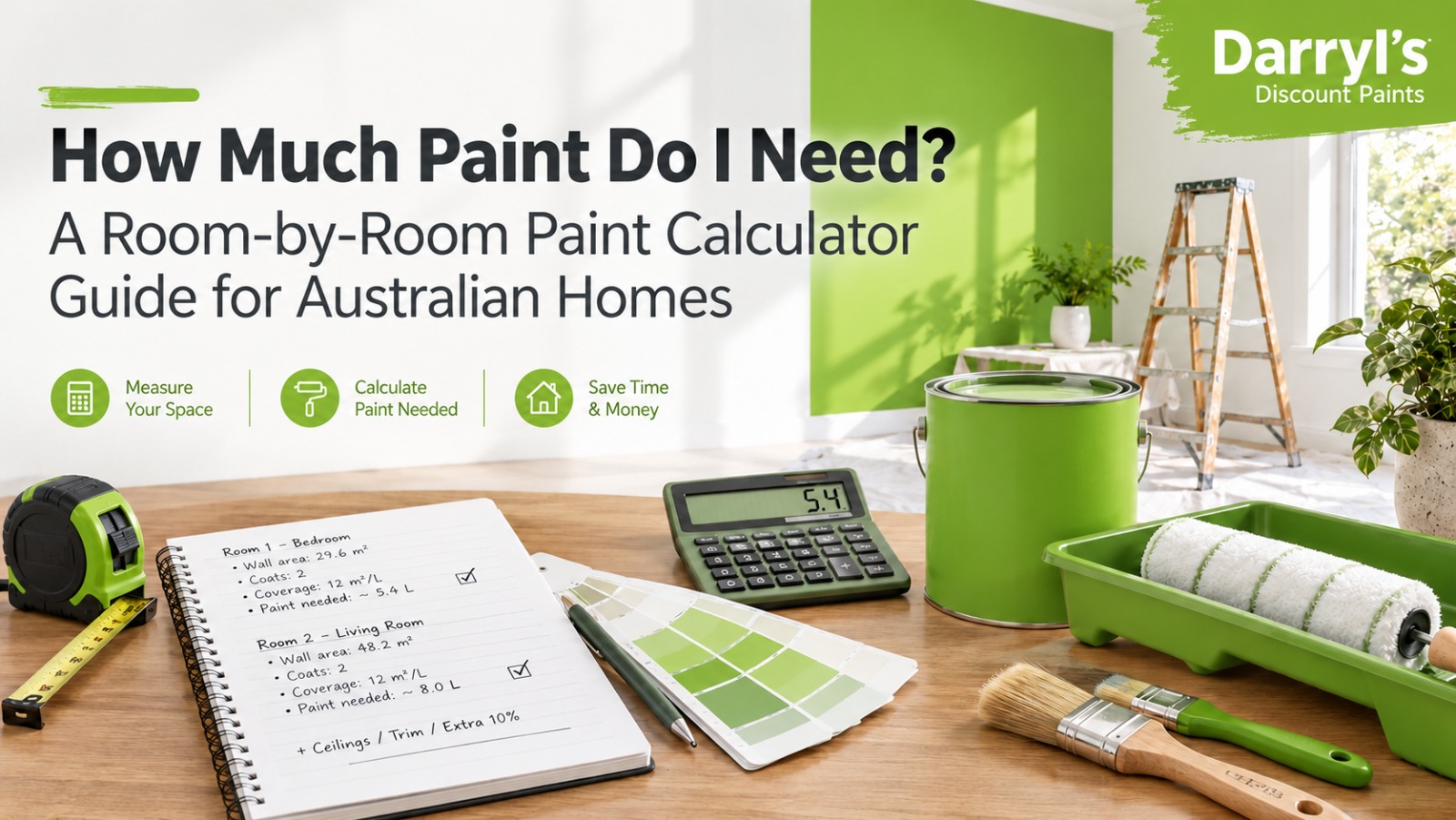
Running out of paint halfway across a wall is frustrating. Buying far more than you need leaves money sitting in the shed. A sensible estimate starts with a tape measure and the coverage information for the actual product you plan to use.
Room names and floor area are not enough on their own. A small bedroom with a high ceiling can have more wall surface than you expect, while a large kitchen may contain substantial cabinetry that will not be painted. Work through each surface separately and the calculation becomes much easier to trust.
Use this basic paint calculation
The starting formula is simple: paintable area in square metres, multiplied by the number of coats, divided by the product’s coverage in square metres per litre. The result is the estimated number of litres before any allowance for waste or surface variation.
For example, 40 square metres of wall needing two coats at an assumed coverage of 12 square metres per litre requires about 6.7 litres. That 12-square-metre figure is an illustration, not a promise for every paint. Read the tin or technical data sheet.
Coverage can vary with the substrate, application method and product. Do not use the spread rate for ceiling paint to estimate an enamel or textured coating. Keep the calculations separate even if you intend to use the same colour throughout.
Measure walls instead of guessing from the floor
For a rectangular room, add the lengths of all four walls to find the perimeter, then multiply by wall height. A room measuring 4 metres by 3 metres has a perimeter of 14 metres. At 2.4 metres high, its gross wall area is 33.6 square metres.
Measure large doors and windows if you want to deduct them. Suppose those openings total 4 square metres. The paintable wall area becomes 29.6 square metres, before considering any other surfaces that will be excluded.
Do not get trapped in tiny deductions. Measuring every power point adds effort without improving a household estimate meaningfully. Concentrate on the large openings and remember that some paint remains in the roller, tray and brushes.
A bedroom example from start to finish
Using that 4-by-3-metre bedroom, take the 29.6 square metres of wall area and assume two coats. At an illustrative spread rate of 12 square metres per litre, the calculation is 29.6 multiplied by two, divided by 12. That gives approximately 4.9 litres.
A 10 per cent planning allowance would bring the estimate to roughly 5.4 litres. The allowance is an example, not a universal requirement. Rough surfaces, significant colour changes or awkward application conditions may call for a different approach.
Choose available tin sizes after doing the calculation. Do not assume a five-litre tin will be enough simply because the first result was close. Check the product’s actual coverage, required coats and whether additional matching stock will be available if needed.
Living rooms and open-plan spaces
Open-plan areas need a measured boundary. Sketch the room and label each wall, including short returns and sections around the kitchen. Multiply each section by its height and add the results. Deduct substantial unpainted areas such as full-height cabinetry and large glazed doors.
High ceilings, stair voids and raked walls deserve separate attention. A floor plan will not show their full paintable area. If access requires scaffolding or specialised equipment, speak to a painter rather than treating it as an ordinary weekend ladder job.
For connected rooms using the same product and colour, total their wall requirements before choosing tin sizes. This may reduce unnecessary leftovers. Keep a note of which surfaces share that calculation so ceiling or trim quantities do not accidentally get included.
Kitchens and bathrooms need their own notes
Measure only the exposed walls you intend to paint. Tiled splashbacks, mirrors, shower screens and cupboards can reduce the wall area substantially. The remaining surfaces may still need careful preparation because of grease, condensation or previous coating problems.
Choose a product suitable for the conditions and substrate, then use its spread rate. A bathroom does not automatically require semi-gloss on every wall, and a washable wall paint is not a replacement for waterproofing in a shower area.
If mould or a leak is present, deal with the underlying issue before estimating a cosmetic repaint. Painting over a damp surface is unlikely to give a reliable result, however accurate the litre calculation looks on paper.
Calculate ceilings and trim separately
For a flat rectangular ceiling, length multiplied by width gives the area. The example bedroom has a 12-square-metre ceiling. At an illustrative coverage of 12 square metres per litre and two coats, it would need about two litres before an allowance.
Raked ceilings require the actual sloping surface measurement. Decorative cornices and detailed features may add time and material that a basic floor-area calculation misses. Check whether the ceiling requires a sealer or stain-blocking preparation before applying the finish coat.
For doors, skirting boards and frames, estimate the surface area and use the selected trim product’s instructions. Count both sides of a door if both will be painted. A wall-paint total does not include these surfaces unless you deliberately add them.
Undercoats and colour changes can alter the order
New plaster, bare timber, patched areas and stained surfaces may need different preparation products. Calculate primer or sealer as its own line item. Do not simply add another coat of wall paint and assume it serves the same purpose.
A strong existing colour may need additional preparation or coats to achieve an even finish. Ask about the recommended system before buying. The same applies when changing from an old glossy coating to a different type of finish.
For Adelaide DIY projects using Discount Paints, confirm enough of the exact product and colour is available for the whole job. Discount stock can make careful quantity planning particularly useful. Keep a photo of the label and batch details for reference.
For additional planning advice before starting a painting project, consult the Australian Paint Manufacturers’ Federation guidance on estimating quantities and checking product instructions.
Turn the estimate into a practical shopping list
Record each room, surface area, product, spread rate and coat count. Add a sensible allowance, then round to the available tin sizes. Include preparation materials and tools so you are not comparing the paint price with the entire project cost.
Store a clearly labelled amount for future touch-ups if practical, following the manufacturer’s storage advice. Dispose of unwanted paint through an appropriate local collection service rather than drains. A good estimate leaves enough to finish properly, with a clear reason for every tin you bring home.