


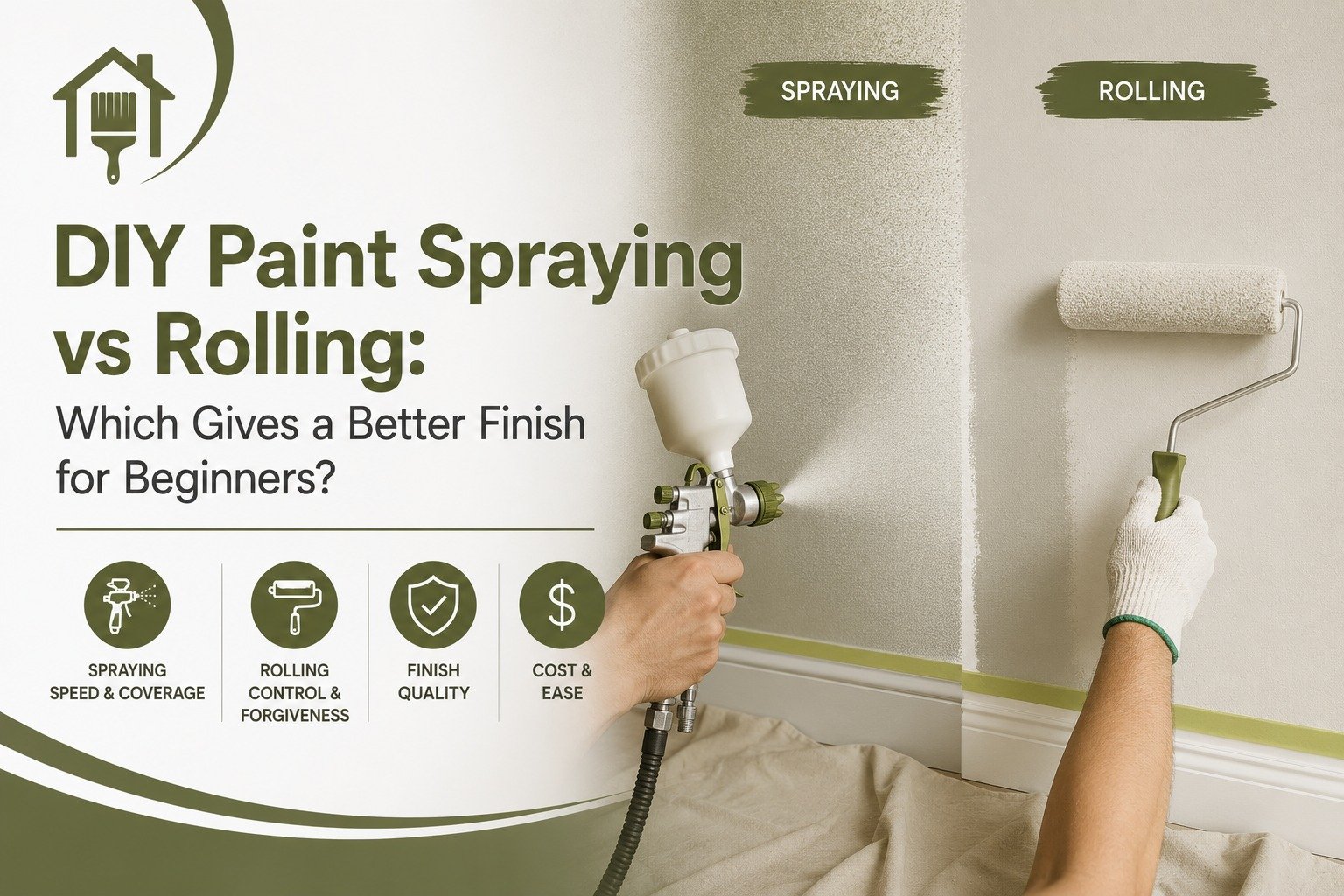
The appeal, and the reality, of spraying
Every DIY painter eventually stands in the paint aisle wondering whether it’s time to buy or hire a sprayer instead of just grabbing another roller. Spraying looks quicker in videos and promises a flawless, factory style finish, but for a first timer, the reality is a bit more complicated than that.
Why rolling is more forgiving
Rolling is forgiving in a way spraying just isn’t. If you miss a spot with a roller, you’ll see it immediately and can go back over it in seconds. Miss a spot with a sprayer, or hold the gun at the wrong angle, and you’ll either get thin, patchy coverage or heavy drips that run before you’ve noticed.
Rolling also requires almost no setup: a tray, a roller, some masking tape, and you’re going. Spraying means masking off literally everything nearby, because overspray travels further than most beginners expect, landing on skirting boards, light fittings, even furniture in the next room if a window’s open.
Where spraying genuinely wins
Spraying earns its keep on textured surfaces and large, uninterrupted areas, think a big rendered exterior wall or a ceiling with heavy texture, where a roller struggles to get even coverage into every dip and crevice. For flat interior walls, doors, and most standard home surfaces, though, the time saved by spraying often gets eaten up entirely by masking prep, and beginners frequently end up with a less even finish than a careful two coat roller job would have given them.
Cost, and what to try first
Cost is worth factoring in too. Hiring a decent sprayer for a weekend, buying the right tip size for your paint viscosity, and working out the settings through trial and error on your actual wall isn’t necessarily cheaper than a couple of good rollers and some extra painter’s tape, especially once you account for the paint wasted while you’re dialling in the spray pattern.
If you’re set on trying spraying, practise first on cardboard or an old fence panel, not your lounge room wall. Get a feel for the trigger control and the distance you need to hold the gun before committing to a room you actually care about.
Whichever method you go with, the paint itself still matters more than people assume. A good quality product levels out and covers better regardless of application method, which is exactly why it’s worth getting proper advice on the right paint for your surface rather than assuming any tin will do the job the same way.